
Murrybowl journal
Best Dog Bowls for Pugs: What to Look For
A practical guide to choosing a bowl that fits your Pug’s everyday mealtime habits.

Choosing the best dog bowl for a Pug is less about finding one magic shape and more about watching a real meal. Does food get nudged out of reach? Does the bowl slide across the floor? Does your Pug seem comfortable, interested, and able to finish at an easy pace? Those small observations make the decision clearer than a trendy label ever will.
Pugs are short-snouted, or brachycephalic, dogs. Veterinary guidance on short-snouted pets explains that their anatomy is individual, so it is wise to keep a bowl choice practical and bring ongoing breathing or eating concerns to your veterinarian. This guide focuses on the everyday parts a bowl can actually help with: access, stability, portions, cleanup, and a calmer routine.
Start by watching one ordinary meal
Before changing bowls, take a minute to notice how your Pug eats their usual food. An enthusiastic eater may still have a perfectly workable setup. The aim is not to turn every meal into a test. It is to spot a pattern that makes the next choice more useful.
- Look at where the food ends up. If kibble gets pushed into a deep edge or onto the floor, an open surface may be easier to manage.
- Notice the approach. A Pug should be able to get close to the food without constantly backing up, circling, or shoving the dish around.
- Listen for change, not personality. Persistent coughing, gagging, regurgitation, appetite changes, or labored breathing are reasons to speak with a veterinarian, not reasons to keep experimenting with bowls.
- Check the floor after dinner. A bowl that skids, spins, or spills makes the feeding area harder for both pet and pet parent.
This simple check also makes it easier to tell whether a new bowl is actually helping. The right choice should make the routine feel more straightforward, not more complicated.
Look for an open, reachable eating surface
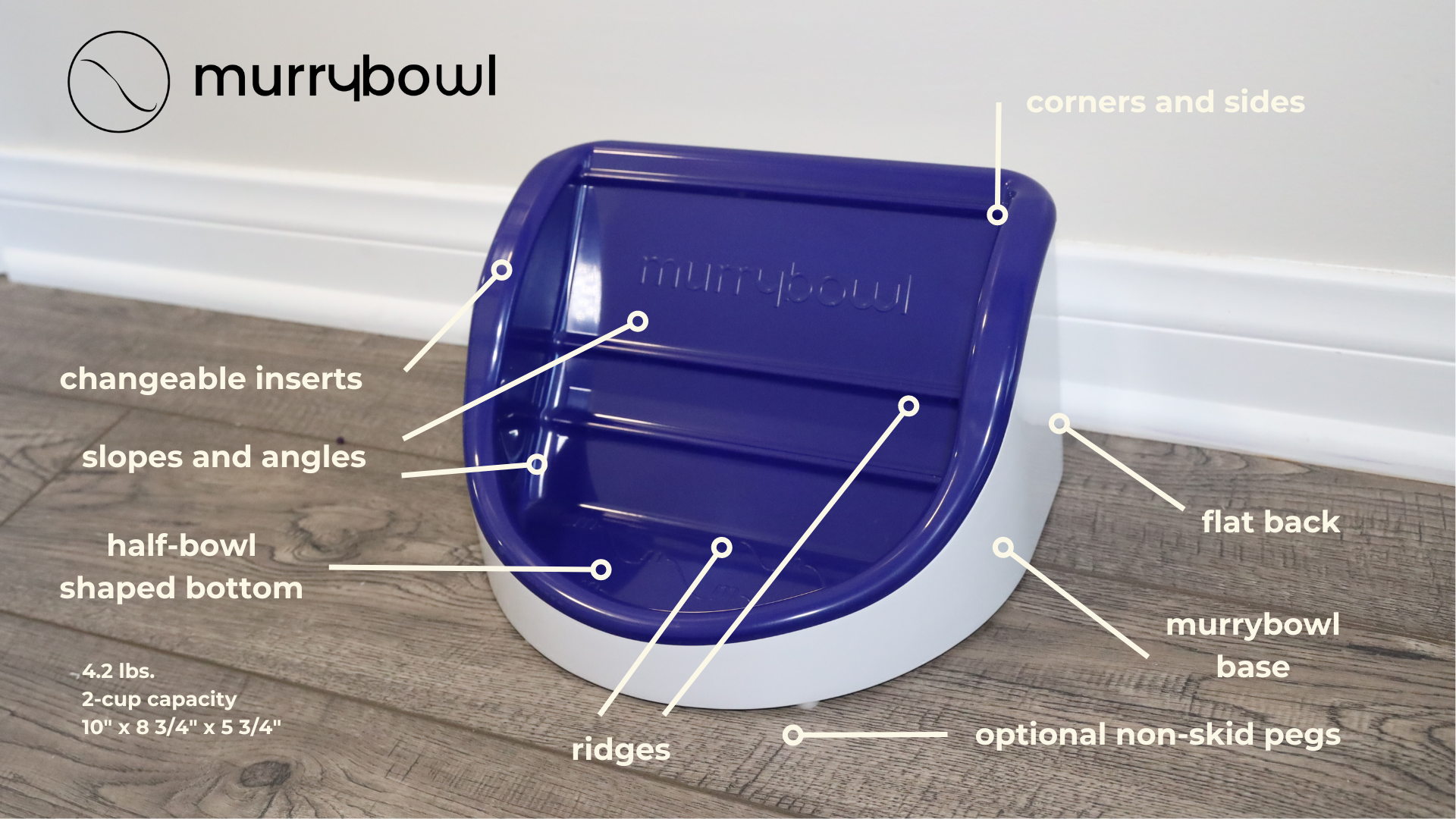
Pugs have short muzzles, and the tight geometry inside some bowls can make an ordinary portion feel farther away than it needs to be. A helpful bowl gives food a clear, approachable area instead of a narrow, deep corner. That does not mean every Pug needs the same angle, height, or texture. It means the food should be easy for your pet to locate and gather during a normal meal.
For dry food, notice whether pieces collect at the rim or scatter past the bowl. For wet food, notice whether there is a surface your pet can lick clean without repeatedly nudging the dish. The shape needs to match the food you actually serve and the way your Pug naturally moves at mealtime.
This is why a bowl made for a generic large dog may not be the best starting point for a compact, flat-faced pet. Pet parents comparing options can see how Murrybowl’s slopes, ridges, and open approach are designed around the job of helping food stay accessible, rather than simply adding height.
Choose stability before clever extras
A bowl that slides away turns dinner into a small chase. Look for a broad footprint, enough weight to settle on your floor, and an underside that is appropriate for the surface where your Pug eats. A non-skid detail can be helpful, but it is not a replacement for a well-balanced base.
Set the empty bowl where you normally feed your pet and gently test it with one hand. If it skates across tile, wood, or laminate before dinner even begins, it is unlikely to feel more secure once your Pug leans into a meal. A stable bowl gives your pet one less moving thing to manage and gives you one less spill to clean.
Murrybowl uses a weighted base and a flat exterior back to help it stay in place. That kind of practical stability matters more than an elaborate stand, especially when the daily goal is simply a calm meal at floor level.
Be careful with slow-feeder patterns
Slow-feeder bowls can be useful for pets that finish meals very quickly, but the maze matters. A tight pattern that works for a long-muzzled dog can be frustrating for a Pug. If you try one, choose wide, open channels and introduce it with a small meal first. Your pet should have to work a little, not give up.
There is no need to assume every Pug needs a slow feeder. If your pet eats at a comfortable pace and can reach their food, a simple feeding surface may be the better fit. If you are worried about speed, portioning the regular meal and asking your veterinarian about the behavior is a more reliable next step than relying on a bowl alone.
A practical rule is to keep the feeding task easy to understand: food remains visible, the pattern does not trap it in unreachable pockets, and your pet can finish without obvious frustration. The bowl should support a routine, not become the whole routine.
Match bowl capacity to the meal, not the breed label
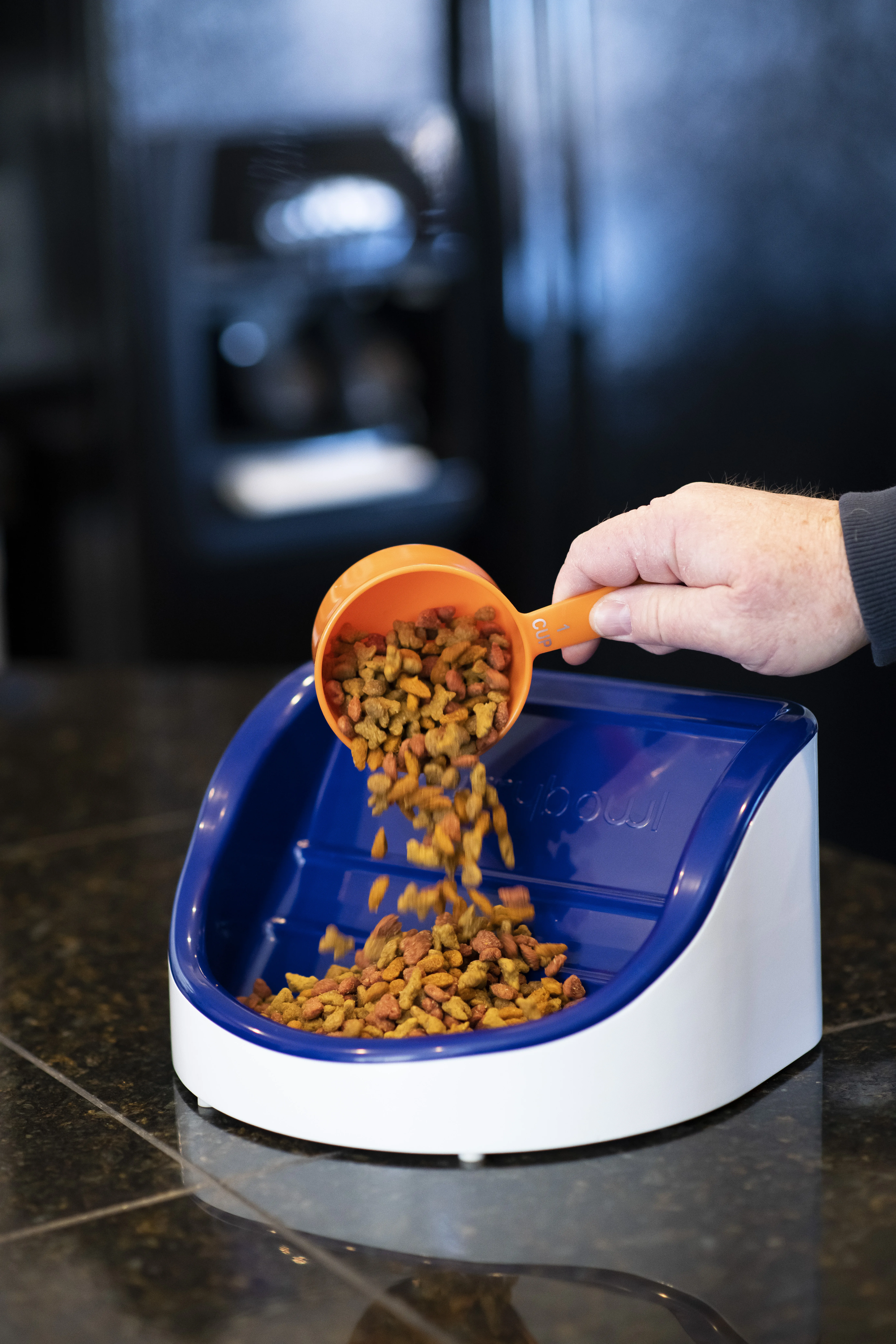
“Pug bowl” is a useful shopping phrase, but it cannot tell you the right portion for an individual pet. Feeding amount depends on the food, life stage, activity, body condition, and veterinary guidance. Measure the usual meal first, then choose a bowl that holds it comfortably without creating a vast, hard-to-reach perimeter.
A properly sized bowl also makes portioning easier to see. That is useful when more than one person feeds the pet or when you are trying to keep a consistent schedule. The Murrybowl welcome guide keeps the setup simple: start with the pet’s normal portion, place the bowl on a stable surface, and watch how they approach it.
Do not use a bowl change to solve an appetite or weight concern. Cornell’s veterinary nutrition team recommends that diet decisions reflect the individual pet’s history and needs, and that is especially true when a Pug’s eating behavior has changed. For a health question, your veterinarian should lead the plan.
Make cleaning easy enough to do every day
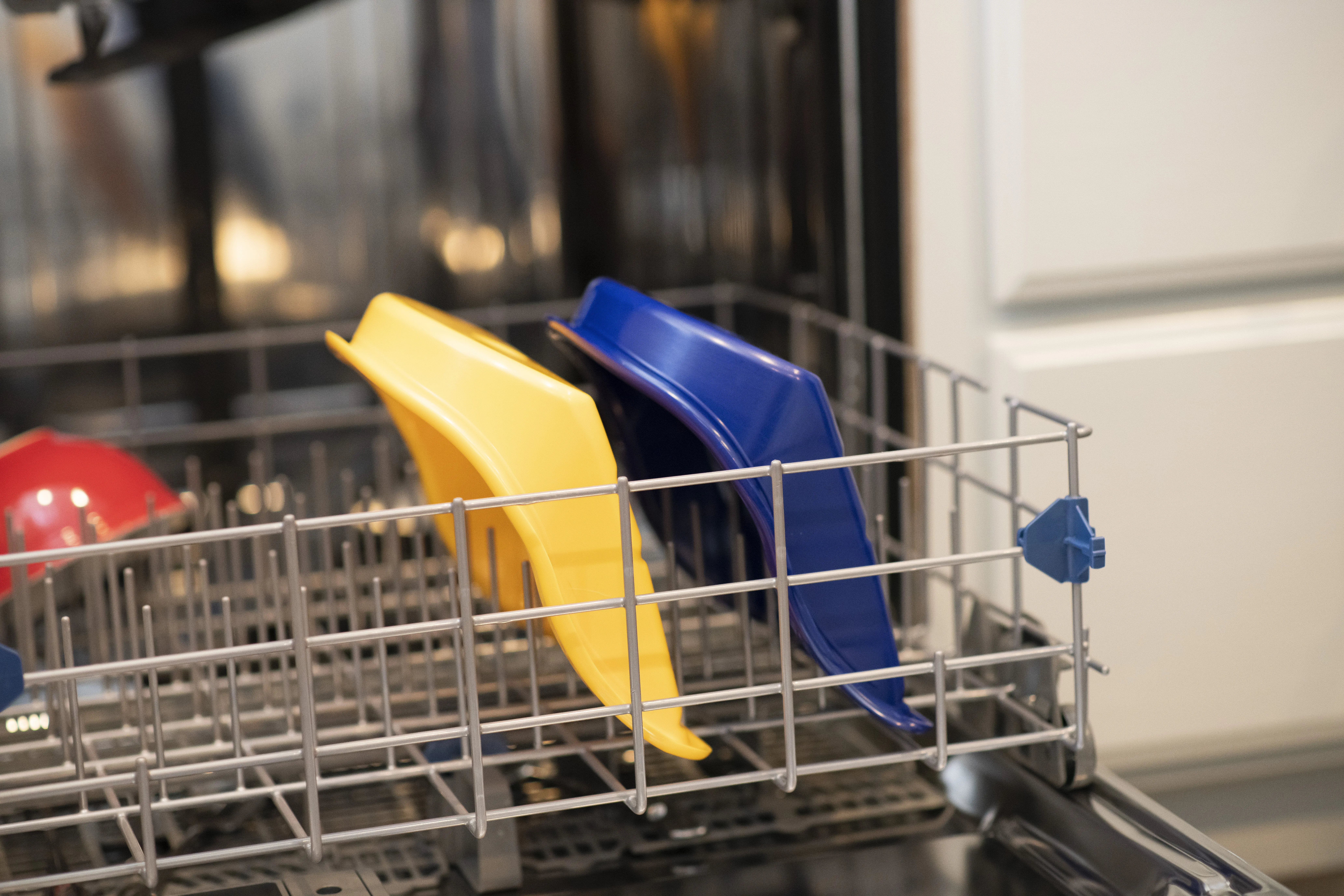
The best dog bowl for a Pug is one you will actually keep clean. Choose a surface that is straightforward to wash, has no awkward hidden channels, and fits your household’s routine. If you use a dishwasher-safe option, check the manufacturer’s care instructions. If you hand-wash, a smooth removable insert is usually much less fussy than a complicated feeding station.
Clean bowls also make it easier to notice when something has changed. Cornell’s canine health guidance on water access recommends clean, fresh water bowls and enough water access for each pet in a household. Keep food and water needs separate in your mind: a shallow feeding surface for food is not automatically the right water setup for every Pug.
Two removable inserts can make a real difference for busy pet parents. One can be in use while the other is being washed, so there is always a clean surface ready for the next meal.
Test the new bowl gently
Once you have chosen a new bowl, keep the first few meals low-pressure. Use your Pug’s usual food and usual feeding spot. Start with a normal measured portion rather than adding toppers or changing the diet at the same time. That way, you can tell what the bowl itself is doing.
- Place the bowl on the usual stable surface. Avoid moving the feeding area and changing the bowl on the same day if you can help it.
- Watch the first few minutes. Look for easy access, a settled bowl, and a pet that can work through the meal without agitation.
- Check what is left behind. A few crumbs are normal. Repeated food trapped in a deep edge or frequent spills suggest the shape is not doing its job.
- Keep notes simple. After several meals, you should be able to say whether the routine feels easier, messier, or unchanged.
If anything feels medically concerning, stop treating it as a product-fitting question. VCA notes that Pugs are among the breeds with short snouts, and persistent respiratory or feeding changes deserve veterinary attention.
Know when a bowl is not the answer
A better feeding surface can make an ordinary meal easier to manage. It cannot explain why a pet has suddenly stopped eating, is losing weight, seems painful, or is having ongoing trouble with food or water. Those changes deserve a conversation with your veterinarian, even if your Pug still seems cheerful at other times.
It is useful to separate what you can observe from what you should try to diagnose. You can see whether the bowl slides, whether food gets trapped at the rim, and whether your pet can comfortably reach a familiar portion. You cannot tell the cause of repeated coughing, gagging, regurgitation, or breathing difficulty from the feeding area alone. VCA’s guidance for short-snouted pets lists more serious signs such as coughing, gagging, retching, vomiting, and lack of appetite as reasons to seek veterinary advice.
This distinction helps keep bowl shopping sensible. Make the practical changes you can measure: a clean surface, a stable base, an approachable shape, and a portion that suits the meal. Then let a veterinary professional guide any health decision. Pet parents do not need to solve every mealtime concern with equipment, and pets are better served when a bowl remains exactly what it is, one useful part of a caring routine.
How Murrybowl fits a Pug’s mealtime
Murrybowl was made for small and medium flat-faced pets, including Pugs. Its feeding surface combines plate-like slopes, spoon-like angles, fork-like ridges, and a textured area so food has more than one place to be gathered. The broad, open shape gives a short muzzle room to approach, while the weighted base helps reduce the little slides and spins that can make a meal messier.
It stays floor-based because a practical feeding surface is not the same thing as a medical recommendation. Murrybowl is a pet-feeding product, not a treatment. Pet parents can explore the Original Murrybowl, see the thoughtful design details on Why It Works, and review shipping and the 30-day satisfaction guarantee before deciding if it is right for their Paw Pal.
A simple Pug bowl checklist
When you are comparing bowls, skip the hype and ask a few straightforward questions:
- Can my Pug approach the food without a tall rim or tight corner getting in the way?
- Does the bowl stay put on the floor where we actually feed?
- Does the surface suit the wet food, dry food, or combination I serve?
- Can I measure a normal meal and clean the bowl without adding extra work?
- Does my pet look comfortable and interested, rather than frustrated?
The best answer is rarely the fanciest bowl. It is the one that supports the meal your Pug already eats, keeps the food within reach, and leaves pet parents with less fuss on the floor afterward.
Frequently asked questions
Should a Pug use a shallow dog bowl?
A shallow, open bowl can be a practical option when it lets a Pug approach food without a tall rim or tight corners getting in the way. Watch your own pet at a normal meal, then choose the shape that keeps food reachable without creating frustration. A veterinarian is the right person to advise on feeding changes related to a medical concern.
Are slow feeder bowls good for Pugs?
A slow feeder may help some Pugs take more time with a meal, but its channels need to be open enough for a short muzzle to work with comfortably. If your pet cannot reach the food, paws at the bowl in frustration, or stops eating, choose a simpler feeding surface and ask your veterinarian for guidance when feeding behavior changes persist.
What size bowl does a Pug need?
Choose capacity around your Pug’s usual measured meal rather than buying the largest bowl available. The useful part is not a universal size number. It is a bowl that holds the portion without sending food into distant corners, sits steadily on the floor, and is easy to wash between meals.
When should I call my veterinarian about my Pug’s eating?
Contact your veterinarian for persistent gagging, coughing, regurgitation, vomiting, trouble breathing, reduced appetite, pain, or a sudden change in eating behavior. A bowl can support a routine, but it cannot diagnose or treat a health condition.